Posted by RV Solutions on 21st Aug 2026
Lithium is the biggest jump in usable power an RV can get — more capacity, less weight, and years more life. But swapping to lithium isn't as simple as dropping a new battery into the old spot. Here's what a proper LiFePO4 conversion actually involves, so you know what you're taking on before you start.
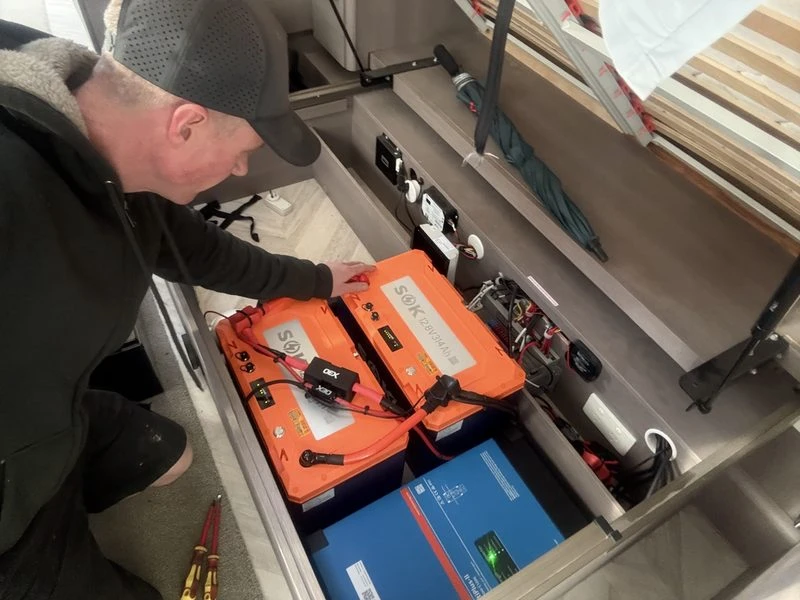
The most important thing to understand up front: lithium is not a drop-in replacement for lead-acid or AGM. You can physically wire one in, but if the rest of your system is still set up for lead-acid, you'll either never fill the battery, damage it over time, or lose most of the benefit you paid for.
That's because lithium (specifically LiFePO4, the chemistry used in RVs) charges differently, tolerates different conditions, and delivers power differently to the old wet-cell or AGM batteries most rigs came with. Get the supporting parts right and lithium is superb. Get them wrong and it's an expensive disappointment. So the real question isn't "which battery?" — it's "what does my whole system need to run lithium properly?"
For most people who camp off-grid or travel regularly, yes — but it's worth being clear-eyed about the trade-off.
Here's the checklist. Depending on your existing setup you may already have some of these, but every one of them needs to be lithium-appropriate for the conversion to work.
The battery itself needs a quality built-in Battery Management System (BMS) — the electronics that protect each cell, balance them, and cut off charging or discharging before anything gets damaged. A good BMS is the difference between a lithium battery that lasts a decade and one that fails early. This is not the place to buy the cheapest option online.
Sizing matters too: because you can use far more of a lithium battery's capacity, you often don't need to match your old amp-hours like-for-like. A 100Ah lithium can give you similar usable power to 200Ah of lead-acid.
This is the big one people miss. You can't reliably charge lithium straight off your alternator the way many lead-acid setups did. Lithium draws hard, which can overwork or overheat a standard alternator, and the voltage profile is wrong.
A DC-DC charger (also called a B2B, or battery-to-battery charger) sits between your starter battery and your lithium house battery. It takes power while you drive and delivers it at the correct lithium charge profile, while protecting the alternator. Many modern units also take solar input at the same time.
If you have (or plan to add) solar, the MPPT solar controller needs to be set to a lithium charge profile — not the default lead-acid one. In a lot of conversions the DC-DC charger and solar regulator are combined into a single unit, which keeps the install tidy and makes sure both sources charge the battery correctly.
If you charge from shore power or a campsite hook-up, your AC charger must have a lithium setting too. An older lead-acid charger will typically undercharge a lithium battery (leaving you with less than you paid for) or, worse, hold a voltage that isn't ideal for it. Some all-in-one systems roll the mains charger, DC-DC and solar regulator into one box.
LiFePO4 must not be charged below about 0°C or it can be permanently damaged (discharging in the cold is fine). In the New Zealand climate — frosty South Island mornings especially — this matters. Good batteries include low-temp cutoff in the BMS, or you plan the install so the battery lives somewhere it won't freeze. It's an easy thing to overlook and an expensive one to get wrong.
Lithium can deliver very high current very fast, which is great for running an inverter — and unforgiving if the wiring isn't up to it. Undersized or under-fused cable is a real fire risk. A proper conversion re-checks cable gauge, fuse ratings and connections against the new loads and charge rates, to AS/NZS standards.
Lead-acid you could roughly judge by voltage. Lithium holds a flat voltage almost until it's empty, so a simple voltmeter won't tell you much. A battery monitor or shunt (often app-connected) that counts amp-hours in and out is how you actually know your state of charge — well worth including.
If your conversion includes running 230V appliances through an inverter, remember that the 230V side of your RV has its own safety and compliance requirements. If you have a fixed 230V installation it needs an EWOF (Electrical Warrant of Fitness) — worth factoring in while the system's being reworked.
Some of it, sure — swapping a like-for-like battery on a simple 12V setup is within reach of a confident DIYer. But a full lithium conversion touches charging from three sources, alternator protection, fusing, low-temp behaviour and often the 230V side too. That's a systems job, not a parts swap, and the cost of getting the charging or protection wrong is usually more than the saving of doing it yourself.
Our honest advice: if it's a straightforward battery-for-battery change, have a go. If you're changing chemistry and want it to perform and last, it's worth having it designed and installed as a system — sized to your vehicle, your solar, and how you actually travel.
Tell us your vehicle and how you use it, and we'll help you work out exactly what your rig needs — honest advice, no obligation. We install trusted brands like Victron, REDARC and Enerdrive, and can handle the whole conversion at our Christchurch workshop.
See Our Battery UpgradesThis article is general information to help you plan, not specific electrical advice for your vehicle. Battery specifications, charge requirements and compliance obligations vary — always have lithium and 230V work checked or carried out by a qualified professional.
Posted by RV Solutions on 21st Aug 2026