Posted by RV Solutions on 22nd Aug 2026
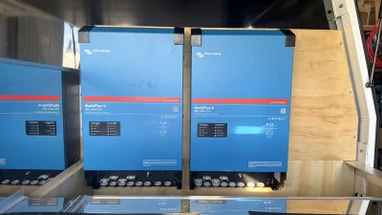
If you've been shopping for a new caravan or motorhome lately, you may have noticed a new number creeping into the spec sheets: 48V. Once the preserve of off-grid homes and boats, 48V power is now arriving in factory RVs — and a growing number of owners are asking whether their existing rig can be upgraded. Here's what the shift means, in plain English.
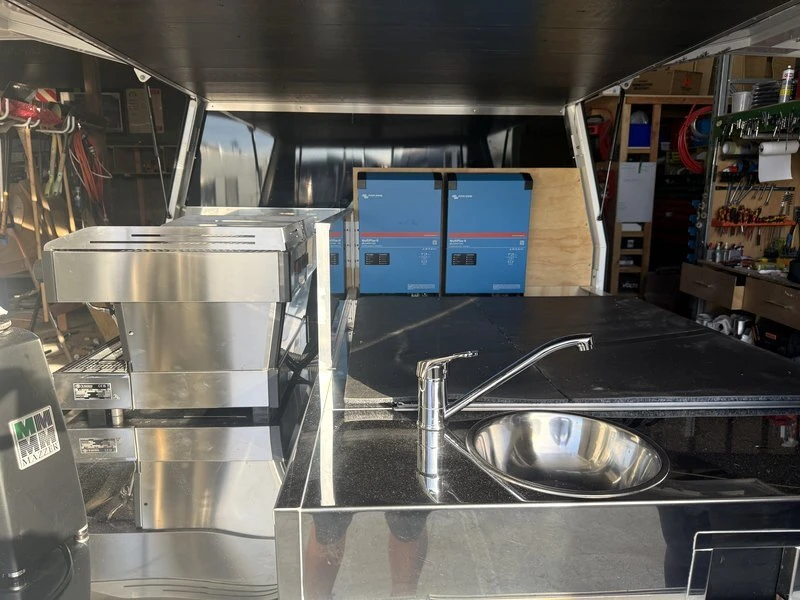
For decades, 12V has been the backbone of RV power — it runs your lights, water pump, fridge and USB points, and it's what nearly every RV appliance is built for. So why change?
The answer is how we use our RVs now. Modern travellers want to run induction cooktops, air conditioning, coffee machines, air fryers, microwaves — often more than one at once, and for hours off-grid. That's a world away from the days of a fridge and a few LED lights. Pushing that much power through a 12V system means enormous current, which brings heavy cabling, heat, and losses. 48V is the industry's answer, and it's moving fast: at the 2026 caravan shows, major brands including Projecta launched dedicated 48V systems, and manufacturers like Jayco now offer big 48V lithium setups on their higher-spec 2026 models.
Power equals voltage times current. Raise the voltage four times (12V → 48V) and you need only a quarter of the current to move the same power. Less current means thinner, lighter cables, far less heat wasted, and more efficient inverters. It's the same idea as the national grid sending power at high voltage — higher voltage moves energy more efficiently.
Comfortably run high-demand appliances — induction cooking, air-con, the lot — without overstressing the system or tripping out.
Less energy lost as heat in the cabling and inverter, so more of what your batteries and solar make actually reaches your appliances.
A quarter of the current means much thinner copper — saving weight and freeing space, which matters in a vehicle.
48V handles large solar arrays far more effectively than 12V, so serious rooftop setups can harvest more of what they generate.
48V isn't automatically "better" for everyone — and any installer worth trusting will tell you so. Here's the balanced picture.
Two points worth understanding. First, nearly all RV appliances are still 12V — your lights, pump, fridge and fans. So a 48V system doesn't replace 12V; it sits above it, and a DC-DC converter steps 48V down to 12V to keep all your existing gear running. Second, 48V systems (especially on the solar side) can reach voltages high enough to be genuinely dangerous — this is not a DIY weekend job, and it shouldn't be treated like one.
This is the question we're hearing most — and for a lot of rigs, the answer is yes, without tearing out what you already have.
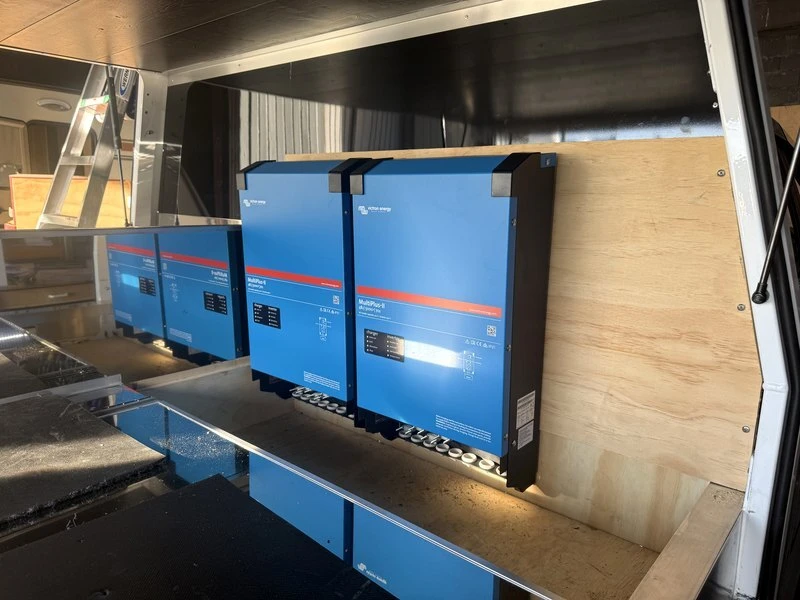
The smart modern approach is a 48V/12V hybrid. Rather than ripping out your existing 12V system, we add a 48V battery bank and let it do the heavy lifting — storing power from your solar and while you drive, and feeding a big inverter for the high-demand appliances. That 48V bank then "bleeds down" through a converter to keep your original 12V system topped up and running exactly as it always did.
You get the 48V benefits — efficient power for induction cooking, air-con and a large inverter — while your factory 12V lights, pump and fridge keep working untouched. It's the best of both: modern capability layered onto a system you already know, done as one properly designed setup rather than a risky rip-and-replace.
Whether a hybrid upgrade makes sense for your rig depends on what you want to run, your solar, your battery space and how you travel. It's very much a designed system — battery sizing, converter capacity, inverter, cabling and protection all have to be matched — so it's worth planning properly rather than bolting bits together.
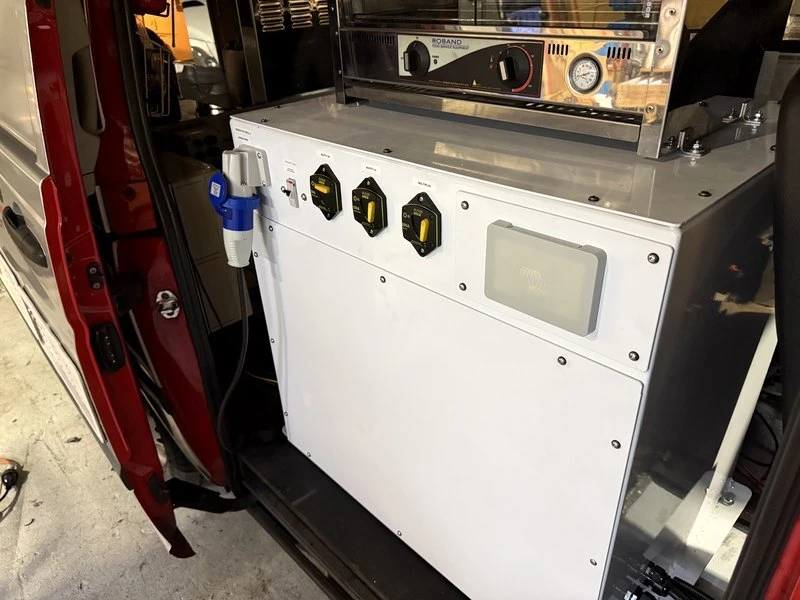
If you've got a modest setup and you're happy with it, 12V remains a perfectly good, simple and affordable choice — don't let the hype push you somewhere you don't need to go. But if you're running (or dreaming of running) a gas-free, appliance-rich, long-stay off-grid setup, 48V is genuinely the direction the industry is heading, and it delivers a level of comfort 12V struggles to match.
The RVs rolling out of factories on 48V are proof the technology has matured. And for the many owners who love their current van but want that next-generation capability, a well-designed hybrid upgrade brings it within reach.
We design and install 48V and 48V/12V hybrid power systems for motorhomes and caravans at our Christchurch workshop — whether you're future-proofing a new van or upgrading one you already love. Tell us how you travel and we'll help you work out what's right — honest advice, no obligation.
Talk to Us About 48VThis article is general information to help you understand 48V RV power, not specific electrical advice for your vehicle. System design, component choice and compliance requirements vary — always have 48V and 230V work designed and carried out by a qualified professional.
Posted by RV Solutions on 22nd Aug 2026