Posted by Matt Bebbington on 19th Jan 2026
A DC to AC inverter is an essential piece of equipment for many RV owners. It allows appliances designed for household electricity to run from your RV's battery system, giving you access to 230-volt power even when you're off-grid.
In simple terms, an inverter converts direct current (DC) from your house batteries into alternating current (AC), the same type of electricity supplied through wall sockets at home. This makes it possible to use everyday appliances such as TVs, coffee machines, and chargers while travelling.
How Does an Inverter Work?
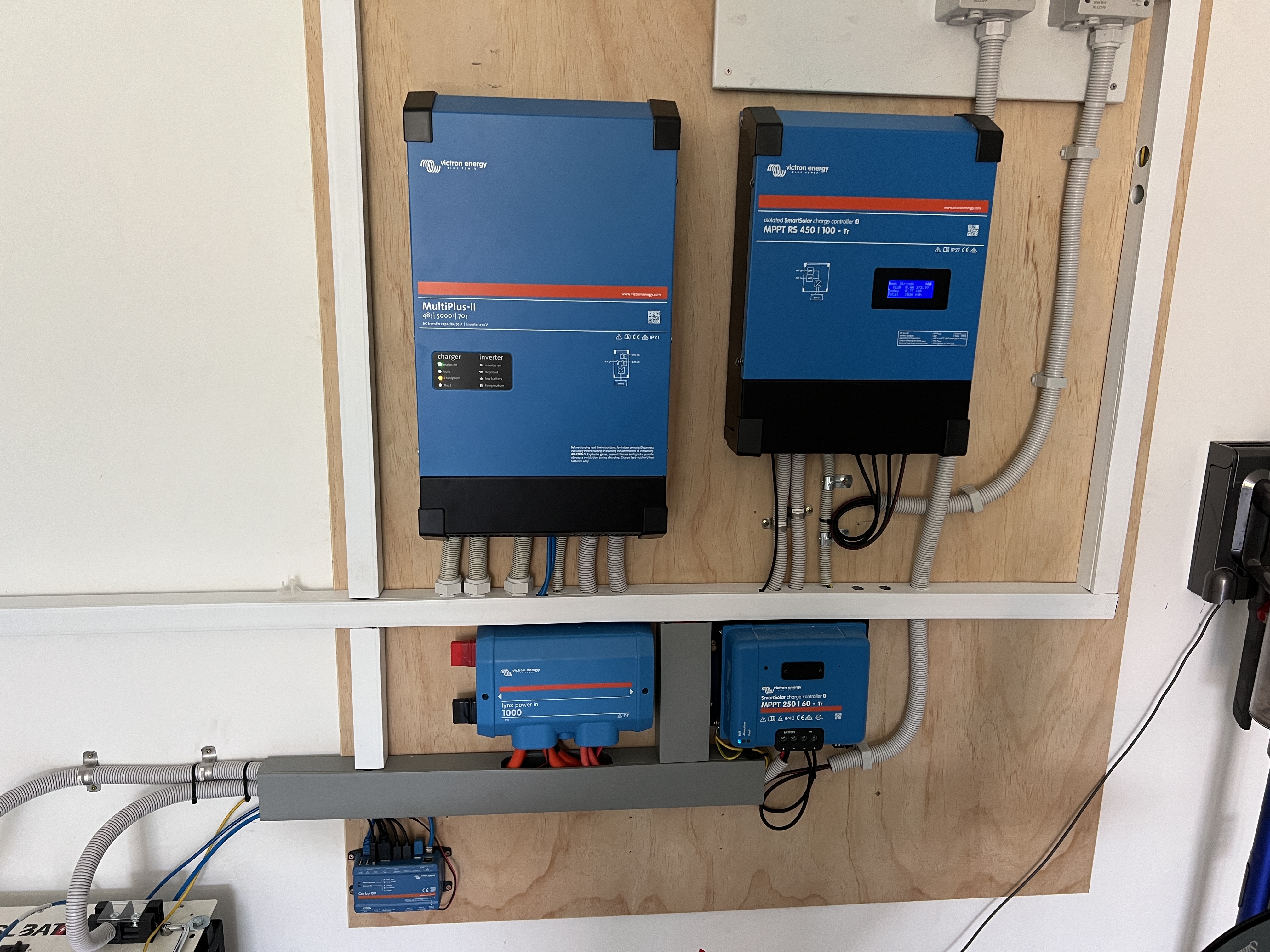
An inverter takes the low-voltage DC power supplied by the batteries (typically 12 volts in most RVs) and electronically boosts and transforms it into 230-volt AC power.
The name "inverter" has an interesting origin. Early electrical converters were designed to change AC power into DC. Eventually, someone realised these devices could be run in reverse—producing AC power from a DC source.
Choosing the Right Inverter
A coffee capsule machine typically uses around 1200 watts
Input Voltage
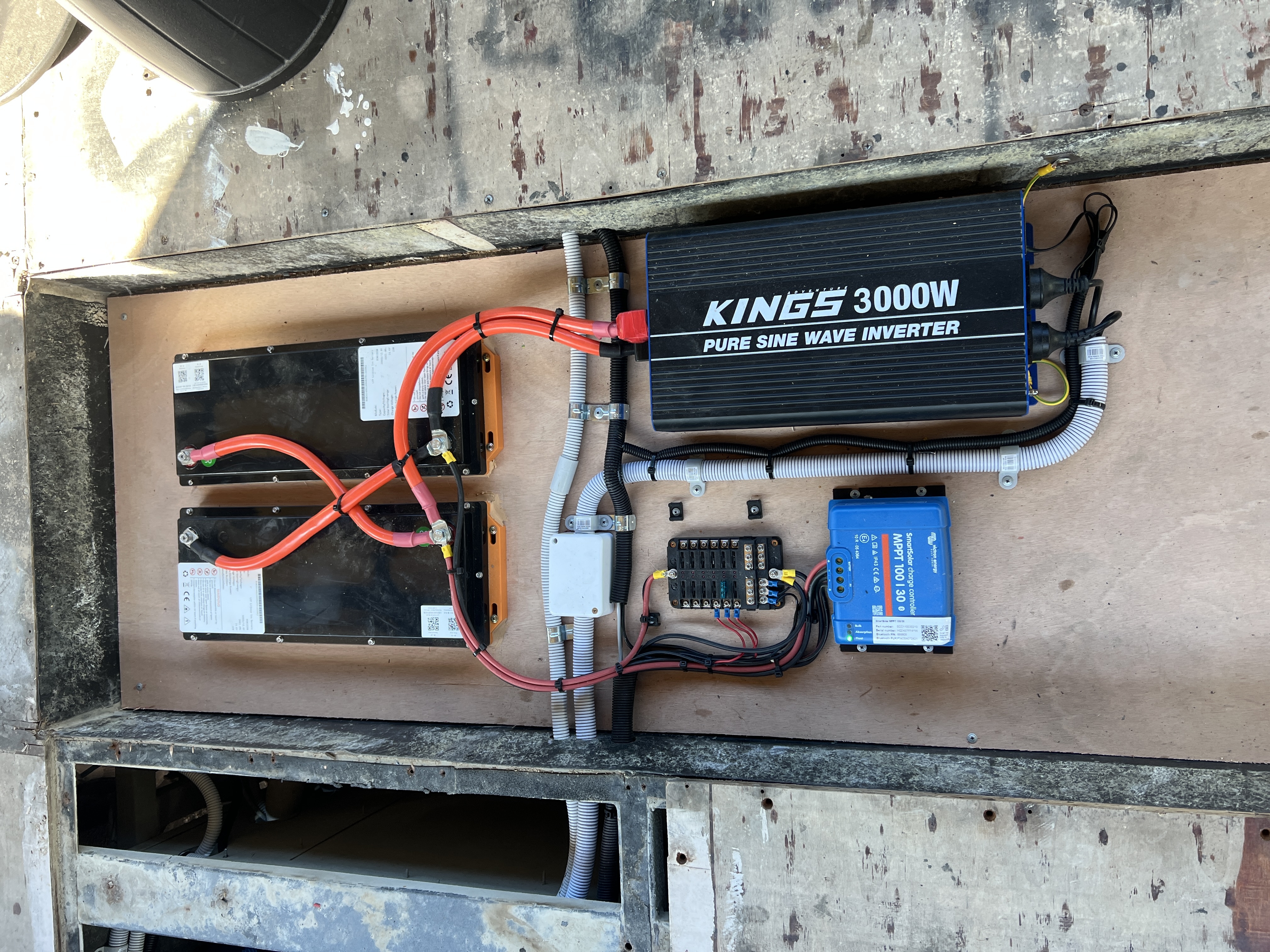
The first consideration when choosing an inverter is input voltage. The inverter must match the voltage of your battery system—most Kiwi RVs use 12 volts, though some larger systems operate at 24 volts.
Output Wattage
Next, determine the required output wattage. This must cover both the running wattage and the start-up (surge) wattage of your appliances. Running wattage is usually listed on the appliance label. Surge wattage, which occurs briefly when appliances start up, can be harder to find but is often available from the manufacturer or retailer.
If you plan to run multiple appliances at the same time, their wattages must be added together. For example, a TV drawing 50 watts and a capsule coffee machine drawing 1000 watts require a combined running load of 1050 watts.
Surge Capability Explained
Inverter surge capability is rated in both watts and time. For instance, a 1200-watt inverter may tolerate a 30 percent overload—around 1560 watts—for up to 10 seconds.
Using the example above, if the coffee machine has a 500-watt surge for 10 seconds and the TV has a 150-watt surge for five seconds, the order in which appliances are switched on matters. If the coffee machine is already past its surge phase when the TV is turned on, a 1200-watt inverter may be sufficient.
As a general rule, higher-quality inverters tolerate larger surge loads for longer periods. Running an inverter well within its rated capacity helps keep temperatures down, improves reliability, and extends its lifespan.
Battery Capacity Considerations
Inverters can place heavy demands on house batteries, causing rapid voltage drops under load. Most inverters include a low-voltage cut-off—typically between 10 and 11 volts—to protect the inverter itself. However, this voltage is often too low to adequately protect the batteries.
Some inverters allow this cut-off point to be adjusted closer to 12 volts, which can significantly improve battery life.
Battery Capacity Rule of Thumb
12V Systems: Total Wattage ÷ 5 = Required Ah
24V Systems: Total Wattage ÷ 10 = Required Ah
Example: 1400W ÷ 5 = 280Ah battery capacity needed (12V system)
For example, a continuous load of 1400 watts on a 12-volt system would require approximately 280 amp-hours of battery capacity (1400 ÷ 5 = 280) to operate effectively until the desired depth of discharge is reached.
Battery Upgrade Recommended?
If your calculations show you need more battery capacity, we can help. Check out our RV Battery Upgrade services to learn about lithium and AGM battery options.
Installation Essentials
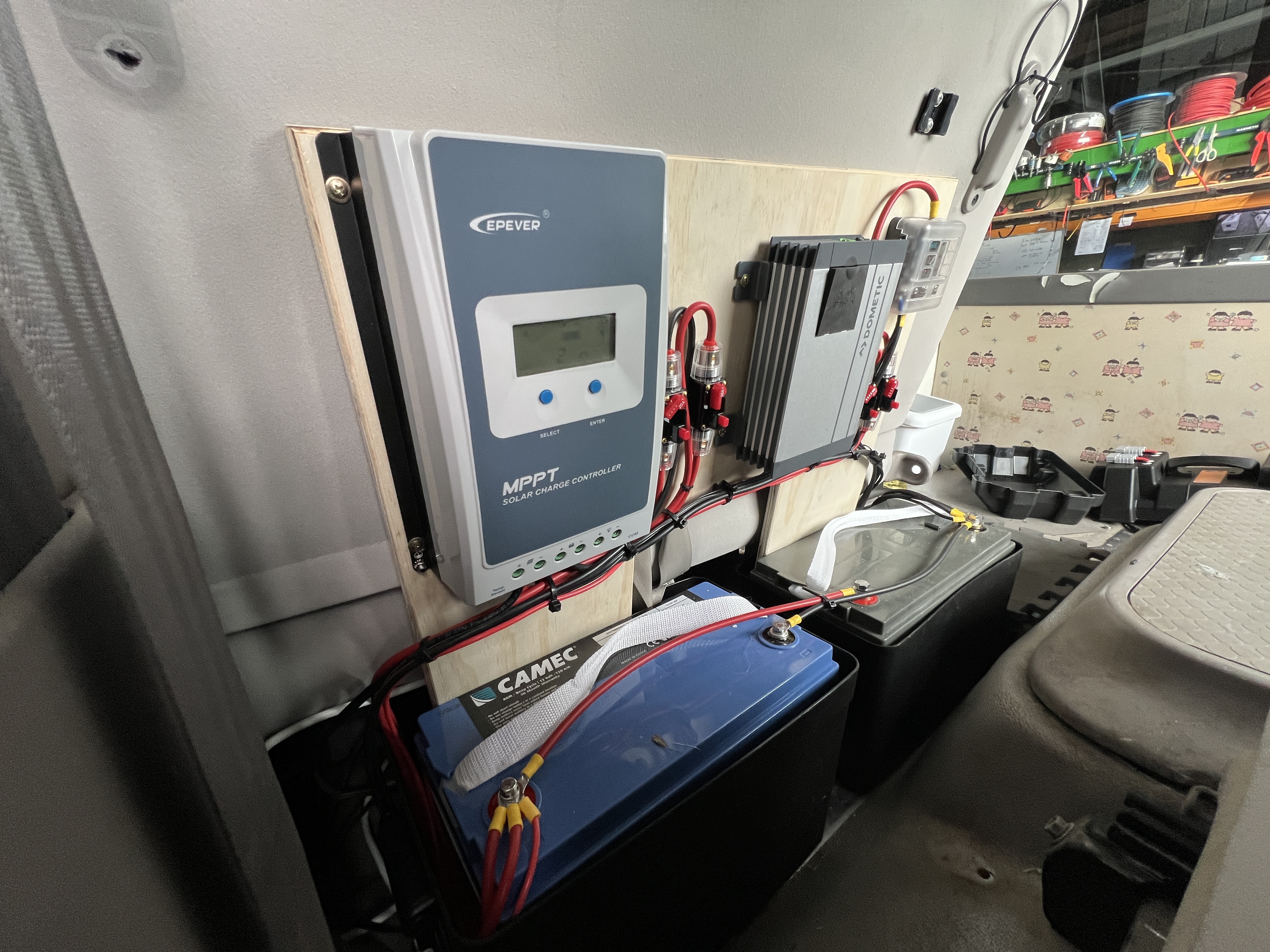
An inverter should be installed as close to the batteries as possible to minimise voltage drop and reduce heat caused by resistance. Heavy-duty cabling of the correct size is essential.
Appropriate circuit protection must also be installed, such as a heavy-duty fuse or circuit breaker, to protect both the inverter and the electrical system.
⚠️ Professional Installation Recommended
Installing an inverter in an RV can be a rewarding DIY project, but there are pitfalls for the unwary. Incorrect cable sizing, poor connections, or inadequate circuit protection can lead to fire hazards, equipment damage, and premature battery failure.
If you're unsure, professional advice and installation is well worth seeking. Our team at RV Solutions in Christchurch has extensive experience with inverter installations and can ensure your system is safe, compliant, and optimized for your needs.
Final Thoughts
A correctly selected and installed inverter will provide reliable 230-volt power and help maximise the life of your house batteries. Get it wrong, and the result can be costly equipment damage and premature battery failure.
When choosing an inverter, remember to:
- Match the input voltage to your battery system (12V or 24V)
- Calculate total running wattage plus surge requirements
- Ensure adequate battery capacity using the formulas above
- Install close to batteries with proper cable sizing
- Include appropriate circuit protection
- Consider professional installation for safety and reliability
Need Help With Your Inverter Installation?
Our team in Christchurch can help you choose the right inverter, calculate your power requirements, and install it professionally.