Posted by Matt Bebbington on 18th Jan 2026
If you own a motorhome or caravan in New Zealand, understanding the Electrical Warrant of Fitness (EWOF) is essential for safe travel and legal compliance. This plain-English guide covers everything Christchurch and Canterbury RV owners need to know — what an EWOF is, who needs one, what's tested, and how to get certified.
What Is an EWOF?
An Electrical Warrant of Fitness (EWOF) is a certification confirming that your motorhome, caravan or recreational vehicle's 230V AC electrical system is electrically safe and compliant with New Zealand electrical standards. It's similar to a vehicle's Warrant of Fitness, but specifically for your RV's mains-power electrical installation.
The inspection is carried out by a Registered Electrical Inspector who tests and verifies that your RV's electrical system meets the safety requirements set out in the AS/NZS 3001.2 standard. That includes checking wiring, outlets, circuit protection, earth bonding, and every component that connects to or operates from 230V shore power.
Key fact: EWOF vs self-containment
Both matter for RV owners, but they're different. The EWOF covers electrical safety, while self-containment certification (the green warrant) covers fresh water, grey/black water and toilet facilities required for freedom camping.
You need BOTH to legally freedom camp at most designated sites in New Zealand.
Is an EWOF Legally Required in New Zealand?
Yes — an EWOF is a legal requirement in New Zealand under the Electricity (Safety) Regulations 2010. Here's what that means in practice:
- Connecting to shore power: a current Warrant of Electrical Fitness is required before your motorhome or caravan can be connected to the 230V supply system.
- Holiday parks & campgrounds: most holiday parks, motorhome parks and campgrounds in New Zealand require a valid EWOF before they'll let you connect to their power supply.
- Freedom camping: while the self-containment green warrant is what allows you to freedom camp, many council-managed sites also expect valid electrical certification.
- Legal liability: keeping your EWOF current is a genuine safety issue — and it would almost certainly come under scrutiny if there were ever a fire or electrical accident.
Without a current EWOF
Operating without a valid EWOF can see you turned away from motorhome parks and campgrounds across New Zealand. More importantly, it leaves you, your family and others exposed to the risk of electrical fire, electric shock and equipment damage.
How Long Is an EWOF Valid?
An electrical WOF is valid for four years from the month of issue. So you'll need to renew your EWOF every four years to stay compliant and keep connecting to shore power legally.
When you receive your EWOF, you'll get:
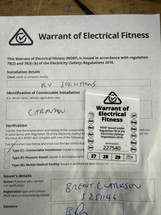
- An official EWOF certificate with your vehicle's details and expiry date.
- A window sticker showing your EWOF is current (much like a vehicle WOF sticker).
- Documentation of the testing performed and any issues identified.
Worth remembering
As with your motor vehicle's WOF, an EWOF only confirms the system is safe at the time of inspection. Even with a current certificate, keep maintaining your electrical system and watch for signs of wear, damage or malfunction.
Who Can Issue an EWOF in Christchurch?
An EWOF can only be issued by a Registered Electrical Inspector — a specialised qualification that goes beyond a standard electrician's licence. Registered Electrical Inspectors have additional training, certification and insurance to carry out electrical safety inspections and issue compliance certificates.
In Christchurch and throughout New Zealand, look for:
- EWRB (Electrical Workers Registration Board) Registered Electrical Inspectors.
- Inspectors with specific experience in RV and caravan electrical systems.
- Professionals who carry proper testing equipment and hold current practising licences.

Brent Clarkson — EWRB Registered Electrical Inspector & Engineer
At RV Solutions in Christchurch, EWOF inspections are personally overseen by Brent Clarkson, an EWRB Registered Electrical Inspector and Electrical Engineer with decades of experience in mobile electrical systems.
Brent's hands-on expertise across motorhome and caravan wiring, protective devices and compliance testing means your inspection is thorough, accurate and backed by industry-recognised qualifications. He works from our Sydenham workshop and also offers a mobile EWOF service across Canterbury.
What Does an EWOF Inspection Cover?
An EWOF inspection is a comprehensive assessment of your RV's 230V AC electrical system. It's a general safety check aligned with AS/NZS 3019:2022, and includes both a visual inspection and electrical testing.
Visual inspection
The inspector examines:
- Wiring condition: checking for damage, wear, deterioration or improper installation.
- Outlets and switches: verifying all AC outlets, switches and fittings are secure and undamaged.
- Circuit breakers & RCDs: ensuring protective devices are correctly rated and installed.
- Shore-power connection: inspecting the inlet socket and connection hardware.
- Installation quality: verifying the work meets New Zealand electrical standards.
Electrical testing
Using professional test equipment, the inspector measures:
- Earth continuity: verifying earth connections provide effective fault protection.
- Insulation resistance: testing for current leakage and insulation breakdown.
- Polarity: confirming correct wiring of active, neutral and earth conductors.
- RCD operation: testing that residual current devices trip correctly and within safe timeframes.
- Circuit performance: load testing to verify circuits handle expected demand.
What about 12V DC systems?
EWOF inspections in New Zealand currently focus on 230V AC systems only. Your 12V DC battery systems, solar installations and low-voltage wiring aren't covered under standard EWOF certification — but they should still be maintained properly, and we can inspect them separately for safety and performance.
What Happens If My RV Fails the Inspection?
If issues are found, the inspector gives you a detailed report explaining exactly what needs attention. Common issues include:
- Deteriorated or damaged wiring needing replacement.
- Incorrectly sized circuit protection (fuses or breakers).
- Poor earth bonding or missing earth connections.
- Faulty RCDs that don't trip within safe parameters.
- Loose connections or corroded terminals.
- Non-compliant installations or modifications.
The good news is most issues are relatively straightforward for a qualified electrician to fix. Once repairs are done, the inspector re-tests your system and, if everything passes, issues your EWOF.
At RV Solutions, we handle both the inspection and any necessary repairs in our Christchurch workshop — saving you time and getting your RV compliant in one place.
EWOF and Self-Containment: How They Connect
If you're planning to freedom camp in New Zealand, it helps to understand how the EWOF relates to the self-containment requirements.
The green warrant system
If you own a private vehicle, you can only freedom camp on local authority land if your vehicle is certified self-contained. Private vehicles must be inspected and certified under the green warrant requirements.
Key requirements for the green warrant include:
- A fixed toilet (portable toilets no longer qualify).
- Fresh water capacity of at least 12 litres per person (3 days at 4L per person per day).
- Sealed grey/black wastewater tanks with proper venting.
- A sink connected to the wastewater system via a water trap.
- A 3-metre evacuation hose for wastewater disposal.
While the green warrant focuses on plumbing and waste, many self-containment certifiers also check that your EWOF is current as part of the overall vehicle safety assessment.
Christchurch freedom-camping tip
To legally freedom camp in Christchurch and across Canterbury you'll need BOTH a current green warrant (self-containment) AND a valid EWOF (electrical safety). Always check local council bylaws too — some areas have additional restrictions or designated-sites-only rules.
How to Prepare for Your EWOF Inspection
A few simple things make your inspection go smoothly:
- Clear access: make sure the inspector can easily reach your electrical panel, outlets and connections.
- Document previous work: if you've had electrical modifications or repairs done, have the paperwork handy.
- Check the obvious: look for loose outlets, damaged cords or visible wiring problems you can sort beforehand.
- Bring your last EWOF: if you have a previous certificate, bring it along.
- Book ahead: especially over the summer camping season, book your inspection well in advance.
- Plan for repairs: if issues are found, be ready to schedule any repair work.
Common EWOF Questions from Christchurch RV Owners
Do I need an EWOF if I never use shore power?
Technically, if you never connect to shore power, you don't need one. In practice, most campgrounds and holiday parks will still ask for proof of EWOF regardless — and many RV insurance policies require current electrical certification.
Can I get an EWOF for an imported RV?
Yes, but recreational vehicles imported from overseas must comply with New Zealand electricity legislation and applicable standards. A registered electrical inspector will assess the imported installation against Part 1 of AS/NZS 3000 before carrying out the usual inspection for a warrant of electrical fitness. This often means some modifications are needed to meet NZ standards.
What if I modify my electrical system after getting an EWOF?
Any significant electrical modification should be inspected, and may require a new EWOF even if your current one hasn't expired. Always use a licensed electrician for modifications, and ask whether re-certification is needed.
Do marinas require EWOFs for boats?
Yes — a marina can't legally supply shore power to a vessel without a current Vessel Electrical Warrant of Fitness. The requirements are similar but follow a different standard (AS/NZS 3004.2 for marine installations). Brent can carry out EWOF inspections on RVs, caravans and boats.
Book Your EWOF in Christchurch
Don't wait until your EWOF expires. Talk to Brent Clarkson directly to book your inspection — at our Christchurch workshop, or with his mobile EWOF service across Canterbury.
Why Choose RV Solutions for Your EWOF in Christchurch?
Getting your EWOF from a qualified, experienced inspector makes all the difference. At RV Solutions in Christchurch, you get:
- An EWRB Registered Inspector: Brent Clarkson is a fully qualified Electrical Inspector and Engineer.
- RV specialist experience: we understand the quirks of motorhome and caravan electrical systems.
- Professional testing equipment: calibrated, professional-grade instruments.
- Workshop or mobile: visit us at 64 Sandyford Street, Sydenham, or book Brent's mobile service across Canterbury.
- Repairs on the spot: if issues are found, we can often fix them right away.
- Clear reporting: you'll get detailed documentation of everything tested.
Final Thoughts: Stay Safe and Compliant
Your EWOF is more than a piece of paper — it's verification that your RV's electrical system is safe for you, your family and other campers. Valid for four years and offering real peace of mind, keeping a current EWOF is one of the simplest, smartest things you can do as an RV owner.
Whether you're planning a summer road trip around the South Island, settling in for winter at a Christchurch holiday park, or getting ready for freedom-camping adventures, make sure your electrical safety is sorted. A current EWOF opens doors — and power pedestals — across New Zealand while keeping everyone safe.
If you have questions about EWOFs, need to book an inspection, or want to talk through your RV's electrical system, get in touch with RV Solutions in Christchurch. We're here to keep your adventures safe and fully powered.